

In the ever-evolving automotive and tire industry, staying current with advancements and optimizing product offerings is paramount, especially for business owners. One significant area of focus is the 4.00-12 tire conversion, which presents a compelling opportunity to enhance vehicle performance and efficiency. By converting to this specific tire size, businesses can not only meet the diverse needs of their clientele but also unlock a range of benefits including improved traction, better handling, and the potential for enhanced longevity of tire use. As customers increasingly demand high-quality, versatile options, understanding the advantages of 4.00-12 tire conversions can set a business apart in a competitive landscape. Furthermore, the conversion process allows vehicle owners to optimize their tire pressure for varied conditions, leading to safer and more economical operation. By exploring this conversion, businesses can broaden their service offerings and establish themselves as leaders in tire innovation. For those looking to delve deeper into tire management and analysis, the tire pressure calculator is an essential tool to consider, aiding in achieving optimal tire performance across various applications.
Ultimately, adopting the 4.00-12 tire conversion can pave the way for increased customer satisfaction and loyalty, transforming ordinary vehicles into high-performing machines, thereby driving business growth and success.
Common Applications for 4.00-12 Tires
The 4.00-12 tire is a versatile size that finds applications across various industries and vehicles. Here are some common uses that can be beneficial for business owners to consider:
- Agricultural Vehicles: Often used on small tractors and three-wheeled farm carts, suitable for handling rugged terrain and providing stability during operation.
- Utility Vehicles: Commonly found in utility vehicles that perform tasks on farms, golf courses, and municipal maintenance operations.
- Motorcycles and Scooters: Frequently used in older model motorcycles and electric scooters that require moderate load capacities and good traction.
- Light-Duty Industrial Equipment: Suitable for light-duty industrial applications, including certain hand-pushed lawn mowers and gear used in small workshops.
- Trikes for Delivery: Used in three-wheeled motorized vehicles, such as cargo trikes and passenger trikes, popular in rural areas for local deliveries.
4.00-12 tires offer reliability and durability, making them an excellent choice for various applications. For further details on tire specifications, you can check out this tire pressure calculator.

Benefits of 4.00-12 Tire Conversion
Converting to 4.00-12 tires offers numerous advantages for businesses that rely on utility vehicles, motorcycles, or similar equipment. Below are some of the key benefits that owners should consider:
Cost Savings
- Durability and Longevity: 4.00-12 tires are designed to last longer due to their high-quality materials and construction, reducing the frequency of replacements. This longevity decreases overall maintenance costs, allowing businesses to allocate funds elsewhere.
- Lower Operating Costs: With the capability to withstand 15,000 to 20,000 kilometers, businesses experience fewer interruptions, translating to increased productivity and reduced labor hours in tire replacement.
Improved Performance
- Enhanced Traction: These tires are specifically engineered to provide superior traction on various terrains, which is critical for vehicles operating in muddy or uneven environments. Enhanced traction leads to better performance in challenging conditions, increasing operational efficiency.
- Higher Load Capacity: 4.00-12 tires can support greater loads while maintaining stability, making them ideal for agricultural or industrial applications where heavy weights are common. This ensures reliable performance under strenuous conditions.
Increased Safety
- Reliable Construction: With a robust design that includes a 6-prop structure, these tires offer enhanced puncture resistance. This safety feature is vital for preventing accidents that could occur due to tire failure.
- Stability and Control: The broader footprint of these tires enhances vehicle stability, giving operators a better grip on the road. This stability reduces the likelihood of rollovers or skidding, ensuring safer journeys.
Overall, the conversion to 4.00-12 tires presents compelling benefits for businesses, such as cost efficiency, enhanced performance, and improved safety measures. Learn more about tire pressure calculation to ensure you are maximizing the advantages of your new tires.
This infographic illustrates the benefits of 4.00-12 tire conversion, focusing on cost savings, improved performance, and increased safety for businesses.
By considering these advantages, business owners can make informed decisions that enhance their operational efficiency and safety.
Comparison of Tire Sizes: Understanding the 4.00-12 Tire
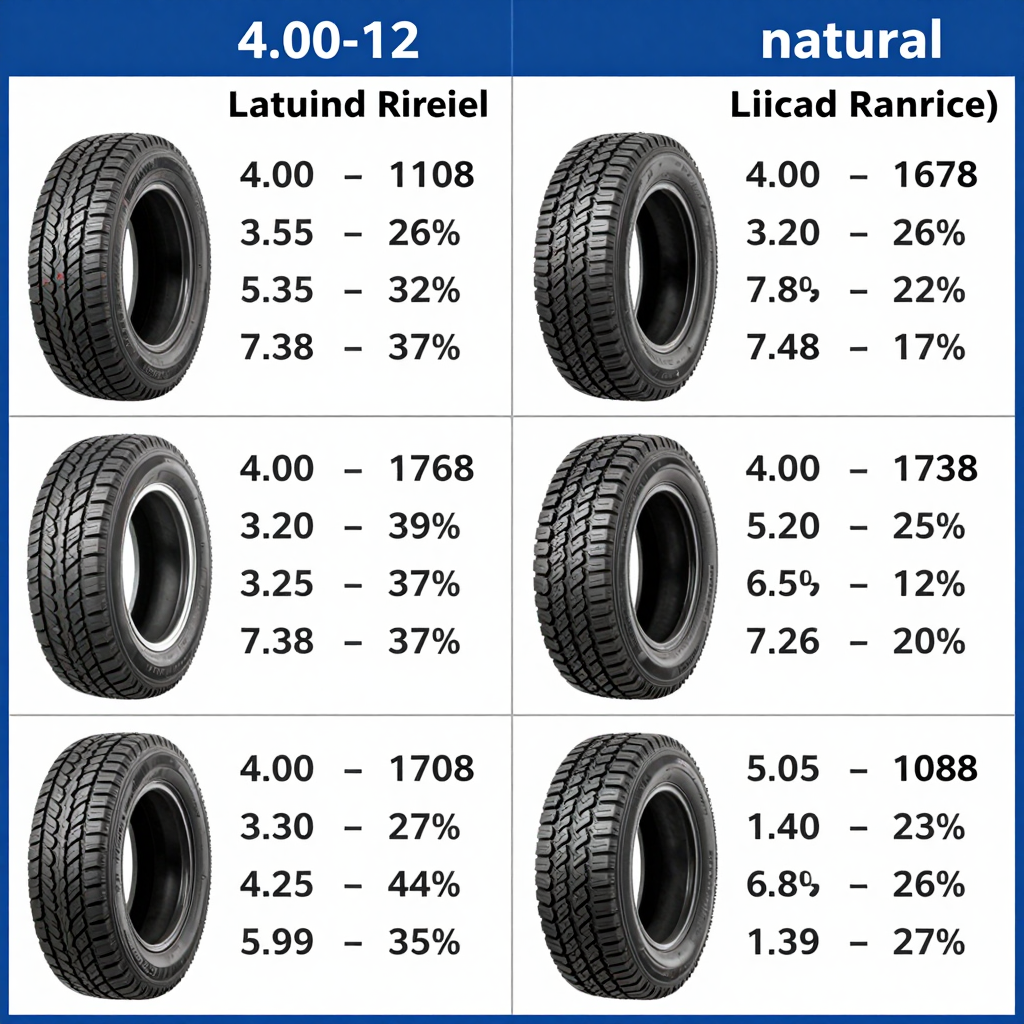
For business owners dealing in tires, it’s crucial to understand the specifications and typical applications of different tire sizes, particularly the 4.00-12 tire. Below is a comparison table highlighting the dimensions, load ratings, and common uses of the 4.00-12 tire alongside several other common tire sizes.
| Tire Size | Section Width | Rim Diameter | Load Rating | Typical Applications |
|---|---|---|---|---|
| 4.00-12 | 4.0 inches | 12 inches | 250 lbs | Older motorcycles, golf carts |
| 4.80-12 | 4.8 inches | 12 inches | 600 lbs | Utility vehicles, lawn equipment |
| 5.00-12 | 5.0 inches | 12 inches | 900 lbs | Larger scooters, small trailers |
| 3.50-10 | 3.5 inches | 10 inches | 200 lbs | Mopeds, small motorcycles |
| 5.30-12 | 5.3 inches | 12 inches | 900 lbs | Specialty trailers, some cars |
The above table provides a concise view of how the 4.00-12 tire measures up against its peers. As noted, this tire size is often utilized in low-speed situations, primarily on vintage motorcycles and utility carts. In contrast, other tire sizes like the 4.80-12 and 5.00-12 are rated for heavier loads and are more versatile in applications.
For detailed specifications and calculators, you might want to check out our Tire Pressure Calculator for optimizing your tire choices.
Step-by-Step Guide to Converting to 4.00-12 Tires
If you are a business owner looking to convert tires to 4.00-12 size, you’ll want to follow a systematic approach. Here’s a detailed guide to help you through the conversion process.
1. Gather the Necessary Tools
Before you start, make sure to have the following tools ready:
- Jack and jack stands: To lift the vehicle safely.
- Tire iron: For loosening and tightening lug nuts.
- Tire levers: These help in removing and installing tires.
- Pressure gauge: To ensure the correct tire pressure.
- Air compressor: For inflating the new tires.
2. Prepare Your Work Area
- Find a flat, stable surface to perform the tire change.
- Ensure the vehicle is turned off and the parking brake is engaged to avoid any accidents.
3. Remove the Old Tires
- Use the tire iron to loosen the lug nuts before lifting the vehicle with the jack.
- Carefully lift the vehicle until the tires are off the ground.
- Once elevated, remove the lug nuts completely and set them aside.
- Remove the old tires by pulling them off the wheel hub. Ensure you note how they were installed so you can replicate the setup with the new tires.
4. Install the New 4.00-12 Tires
- Align the new tire with the wheel hub, ensuring the rim fits securely.
- Push the tire onto the hub firmly until it’s seated correctly in place.
- Replace the lug nuts onto the wheel bolts but do not tighten them fully yet. Hand-tighten them initially.
5. Inflate the New Tires
- Use the air compressor to inflate the new tires to the recommended PSI (usually between 30-35 PSI, but check your tire specifications).
- Use a pressure gauge to confirm accurate inflation.
6. Secure the Wheel
- Once inflated, return to the lug nuts. Using the tire iron, tighten them back down ensuring they are secure. Use a crisscross pattern to ensure even tightening.
- As a tip, consult your vehicle’s manual for the recommended lug nut torque specification.
7. Lower the Vehicle
- Carefully lower the vehicle back to the ground, removing the jack and jack stands.
- After the vehicle is on the ground, give the lug nuts a final tighten to ensure they are secure.
8. Test Drive
- Conduct a short test drive (5-10 minutes) to ensure everything feels balanced and secure.
- After your drive, do a quick check on the lug nuts and tire pressure again to confirm everything is in place.
Conclusion
Converting to 4.00-12 tires is a straightforward process, but attention to detail is key for safety and performance. For tire pressure checks and further specifications, learn more about tire pressure. Always ensure that you consult with a professional if you’re unsure about any step in the process. Happy driving!
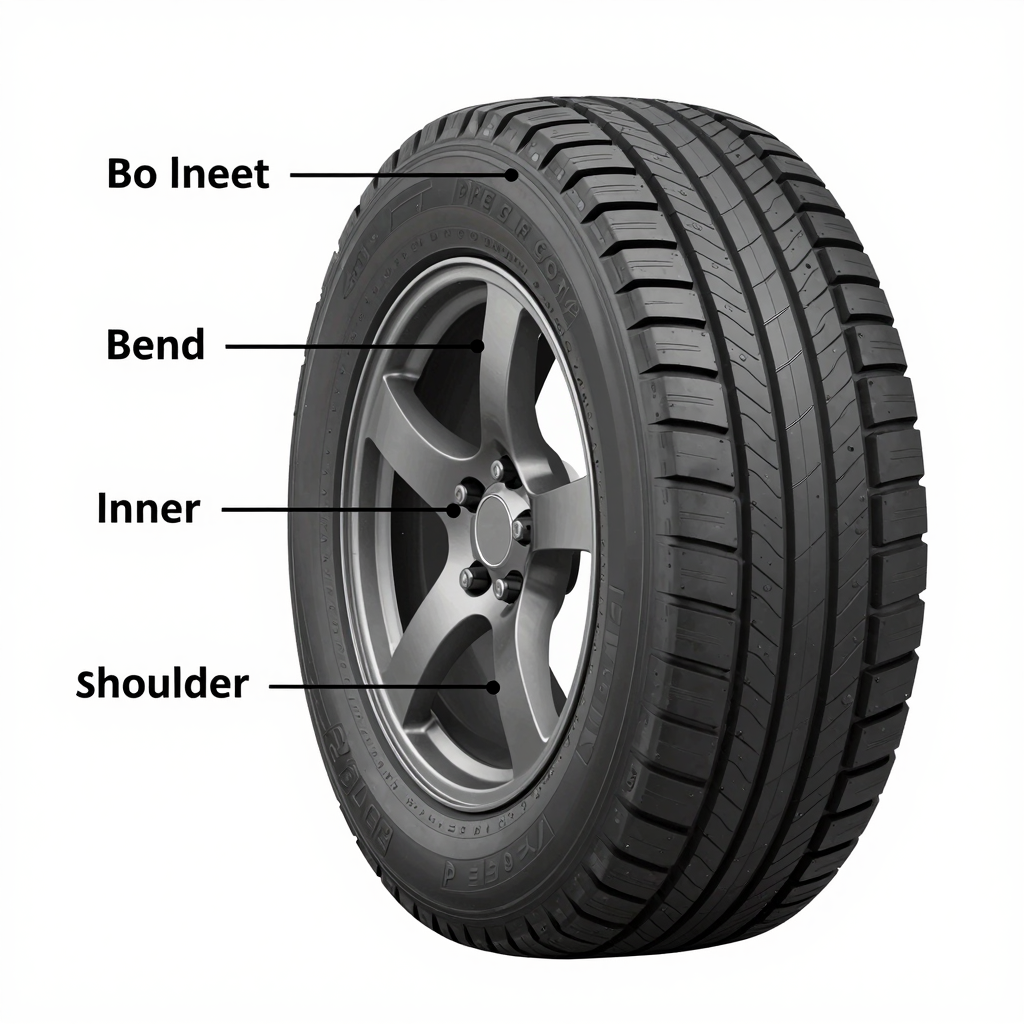
A visual depiction of the tire’s anatomy, showing different components for better understanding of the conversion process with labeled sections. This image aids business owners in grasping essential tire information while considering tire conversions.
Common Misconceptions of Tire Conversions: The Case of 4.00-12 Tires
Tire conversions can spark numerous misconceptions, particularly regarding the 4.00-12 tire size. It’s crucial for business owners and operators to distinguish fact from fiction to ensure safety and optimal performance.
Myth 1: “4.00-12 Tires Are Universally Compatible With Other Sizes”
One prevalent myth is that the 4.00-12 tire can easily replace other tire sizes like 3.75-12 or 4.50-12 without issues. In reality, while the diameter is the same (12 inches), the width differs. For instance, the 4.00 designation refers to a section width of approximately 4 inches (101.6 mm), while a 3.75 tire’s width is smaller, which can lead to fitting problems on the same rim. This mismatch can result in improper seating on the rim, potentially causing dangerous blowouts or handling issues.
Myth 2: “Using 4.00-12 Tires Will Affect Performance Only Slightly”
Another misconception is that switching to a 4.00-12 tire will only have minor effects on vehicle performance. However, compatibility issues can significantly influence how a vehicle behaves on the road. For example, incorrect tire width can lead to problems with steering and cornering stability, especially in vehicles like compact tractors or utility vehicles. If the tire width is not matched properly with the steering geometry, tire wear can increase and handling can decline rapidly. Recent studies suggest that issues such as vibration and uneven tread wear often stem from mechanical incompatibilities rather than the tire quality itself.
Evidence and Reality
When examining the performance of 4.00-12 tires, it’s evident that several variables contribute to effective usage. Both inflation pressure and rim width are critical for maximizing tire performance. Proper inflation reduces the chances of sidewall flex and promotes even tread wear, prolonging the service life of the tire. Compatibility, particularly concerning the mechanical aspects of the vehicle, plays a significant role as well. For instance, a misaligned front axle system can lead to accelerated wear, regardless of the tire’s make or model.
Additionally, it’s essential to note that not all tires categorized under the same size will perform equivalently. For a detailed look at optimizing tire pressure for various models, you can explore our tire pressure calculator.
By understanding the facts and examining the relevant characteristics of the 4.00-12 tire, owners can better ensure compatibility and performance, thus avoiding common pitfalls associated with misconceptions.
Cost Implications of Switching to 4.00-12 Tires
Converting to 4.00-12 tires can yield significant cost benefits for business owners. Below, we detail a comparison between the traditional tires and the newer 4.00-12 tires, focusing on upfront costs and long-term savings.
Cost Comparison Overview
| Category | Traditional Tires | 4.00-12 Tires |
|---|---|---|
| Upfront Cost per Tire | $120 | $100 |
| Total Upfront Cost (6 tires) | $720 | $600 |
| Long-Term Maintenance & Repair Costs (5 years) | $1,080 | $0 |
| Total Cost Over 5 Years | $1,800 | $600 |
| Total Savings Over 5 Years | – | $1,200 |
As shown in the table, the initial investment in 4.00-12 tires is lower than that for traditional tires, along with no ongoing maintenance costs, leading to substantial savings over time.
Visual Representation
Here is a visual representation of the cost implications associated with the conversion:
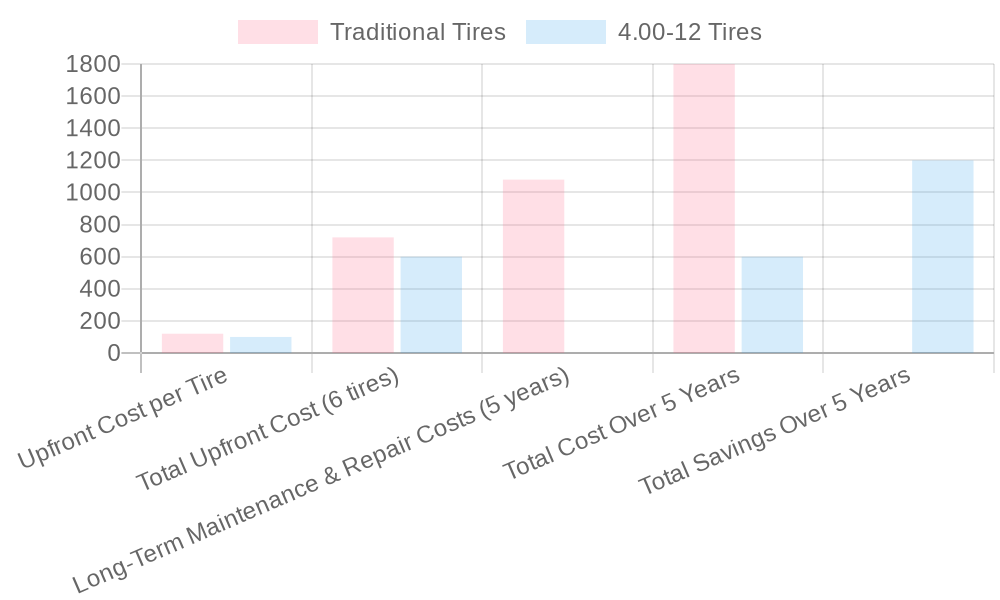
This chart compares the upfront costs and long-term savings associated with 4.00-12 tires versus traditional tires.
For more detailed information on tire pressure and maintenance, check out our tire pressure calculator.
Conclusion
In summary, converting to 4.00-12 tires offers significant advantages for business owners looking to enhance their fleet’s performance and efficiency. The key benefits include improved stability and grip, which can enhance safety on diverse terrains, as well as increased fuel efficiency through optimized tire pressure that minimizes rolling resistance. Additionally, the versatility of 4.00-12 tires makes them suitable for various applications, from landscaping to material handling.
Investing in a tire conversion is not just a modification; it’s a strategic decision that can lead to better safety, reduced maintenance costs, and enhanced productivity. As technology and tire designs evolve, business owners would do well to consider the potential long-term benefits that such an upgrade can offer.
To further explore tire pressure management and maintenance tips, consider using our tire pressure calculator. This tool can help ensure that your fleet operates at peak performance, contributing to overall efficiency and cost savings. Don’t wait to optimize your fleet; make the smart choice for your business today!
Contact Us for 4.00-12 Tire Conversions
Are you a business owner looking to optimize your operations with 4.00-12 tire conversions? At Tire Pressure Calculator, our expertise in tire conversions can help you make informed decisions that meet your specific automotive needs. We comprehend the complexity and importance of selecting the right tire for your vehicles, ensuring safety and efficiency.
Don’t hesitate to reach out for more information or assistance with your tire conversion needs. Contact us today for personalized support and advice tailored to your business. Together, let’s maximize your vehicle’s performance and ensure your operations run smoothly. Learn more about our tire services or get in touch with our experts for assistance.
We’re here to help you achieve the best possible results for your business!